How to Search Alameda Criminal Records
The Alameda County Superior Court splits public access into three portals. Civil, family, and probate cases sit in the eCourt Public Portal. Criminal cases live in the Criminal Online Records Search, sometimes called Odyssey. Traffic citations route through a separate ticket tool. The court’s Public Portals page lists each tool.
- Open the Criminal Online Records Search and register a free account.
- Pick Smart Search or Search Hearings.
- Enter the case number when known, or use last name then first name.
- Review the case header, charges, hearings, and disposition.
- For a court date only, use Find Your Court Date for the next five business days.
- For sealed or juvenile matters, call the Records Office at 510-891-6005.
Note: Find Your Court Date is current as of 5:00 PM Pacific Time on the prior business day and caps results at 200 rows.
Odyssey Criminal Online Records Search
The Criminal Online Records Search is the only official portal for filed Alameda criminal cases. Registration is free. Smart Search runs across court records. Search Hearings runs across hearing dates. A case number search is the fastest match. A name search can return many hits, so a middle name or a hearing date helps narrow the list.
The portal does not cover civil, family, probate, mental health, adoption, or traffic cases. Juvenile delinquency records stay outside public view under WIC § 827. Sealed cases under California Rules of Court rule 2.550 are also not visible. For a sealed or juvenile matter, the only path is a court order or a call to the juvenile clerk at 510-618-1106.
The screenshot below comes from the Alameda County District Attorney homepage.
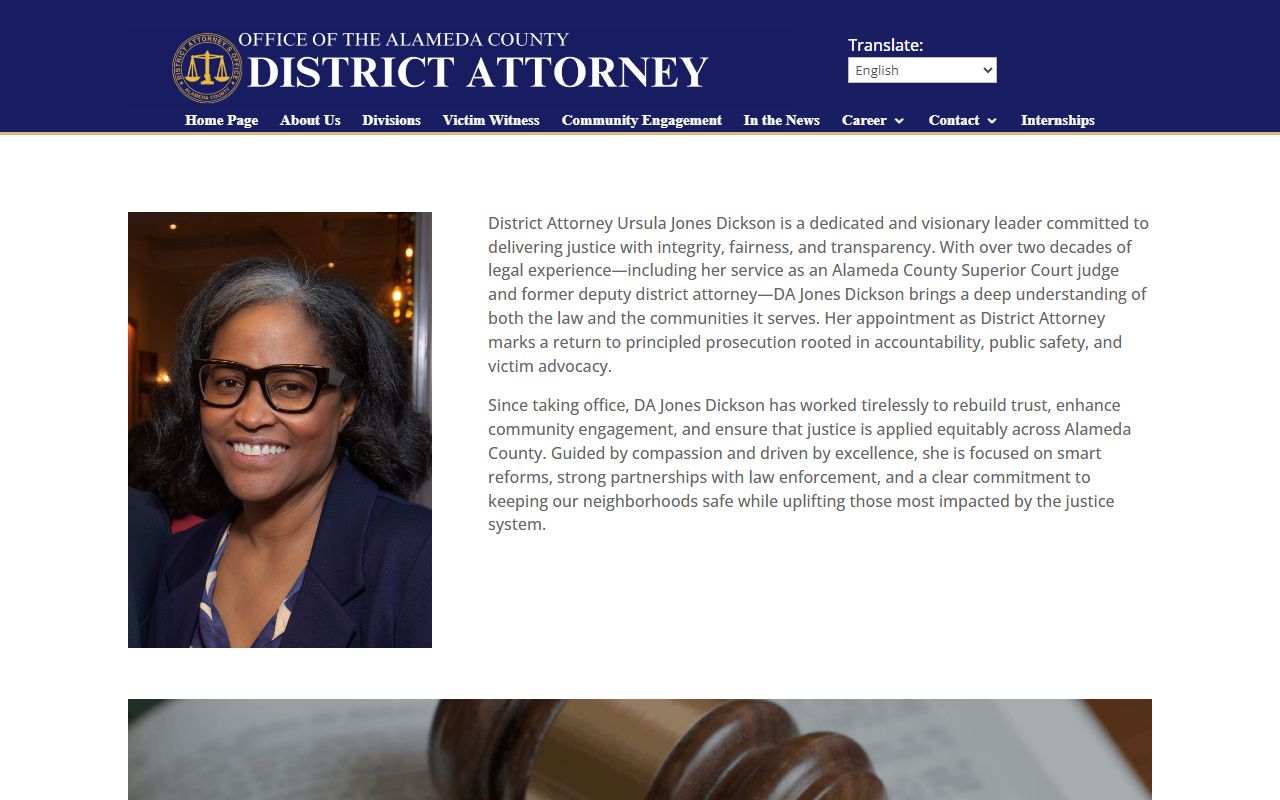
The DA filing decision is what turns a Sheriff booking into an Odyssey criminal case.
Arrest Record vs Criminal Court Record
The Sheriff and the court each hold a different file. An arrest record is the booking material kept by police or the Sheriff. A criminal court record begins when the District Attorney files a complaint, information, or other charging document in Superior Court. A person can sit in the Alameda inmate locator at Santa Rita Jail before a case ever appears in Odyssey. The two systems do not match in real time.
Custody status is not the same as guilt. The Sheriff inmate locator warns that the information shown is the most recent known to the Sheriff’s Office, and that custody status can shift as a case moves through the judicial process. A booking is not a conviction. A filed case is not a conviction either. Only a disposition or judgment in the court record shows the outcome. For more custody detail, see the Alameda County inmate records page.
What Criminal Records Show
A typical Alameda criminal record carries a fixed set of fields. The case caption reads People of the State of California v. defendant. The docket shows each filing, hearing, plea, motion, and order in date order. The Superior Court calls this list a register of actions.
| Field | What It Shows |
|---|---|
| Case Number | Court-assigned ID for the case. |
| Case Caption | People v. defendant. |
| Charges and Statutes | Each count, code section, and level. |
| Level | Infraction, misdemeanor, or felony. |
| Plea | Not guilty, guilty, no contest, or deferred entry. |
| Hearings | Date, time, courtroom, type, and result. |
| Bail / Bond | Amount set, posted, or forfeited. |
| Disposition | Result of each charge or motion. |
| Sentence | Custody, fines, probation, or programs. |
| Redactions | SSN, account numbers, minor names, sealed items. |
A printout from Odyssey is not certified. For a court-ready copy, the request goes to the criminal clerk for the courthouse that heard the case.
Felony, Misdemeanor, and Infraction Cases
The Alameda criminal division handles all three case levels. Infractions are the lowest. Misdemeanors can carry up to a year in county jail. Felonies can carry state prison time. The DA files the charging document. The court sets bail, hears motions, takes a plea, and runs the case through pretrial, trial, and sentencing.
Missing a court date is not a small problem. Court appearances are mandatory. If a defendant fails to appear, the judge can issue a bench warrant. A person on bail can lose it. The court can also add a $300 civil assessment under Penal Code § 1214.1.
Important: A missed criminal court date in Alameda can trigger a bench warrant, bail forfeiture, and a $300 civil assessment under Penal Code § 1214.1.
Criminal clerk lines: Wiley W. Manuel 510-627-4702, René C. Davidson 510-891-6009, Fremont 510-818-7501, East County 925-227-6792, Hayward 510-690-2703. See the warrant records page for bench warrant detail.
Charges vs Convictions
A charge is a claim by the prosecutor. A conviction is a finding by the court after a plea or a verdict at trial. The docket entry that matters is the disposition for each count, not the charge sheet.
| Point | Charge | Conviction |
|---|---|---|
| Source | Prosecutor filing | Court judgment after plea or trial |
| Stage | Pretrial or pending | Post-disposition |
| Status | Active, dropped, reduced, or dismissed | Recorded sentence or terms |
| Public meaning | Accused, not found guilty | Found guilty as recorded |
| Relief path | Possible sealing under § 851.91 | Possible dismissal under § 1203.4 |
A background check that lists only the charges, with no disposition, is a partial check.
Mugshots and Booking Photos
Alameda County does not publish a public mugshot gallery. The Sheriff inmate locator is the official tool for current custody data, and it sits behind a captcha to keep automated scraping out. A mugshot search should start at the Sheriff inmate locator and route through Santa Rita Jail at 925-551-6500 for booking questions. Third-party mugshot sites are not official.
A booking photo, when shown, sits in the custody file rather than the court file. The Sheriff page warns that names of people arrested and booked by Alameda County agencies may not appear in the locator because of law-enforcement exemptions. If a name does not appear, the page directs users to the arresting jurisdiction. See the inmate records page for the full Sheriff workflow.
Sealing Arrests Under Penal Code § 851.91
California gives several paths to clean up a record. The first is for arrests that did not lead to a conviction. Penal Code § 851.91 allows a petition to seal that kind of arrest record. Some government agencies may still see a sealed record, so a seal under § 851.91 is not a full erase. It is a strong restriction on public access.
The image below is from the official Penal Code § 851.91 page.
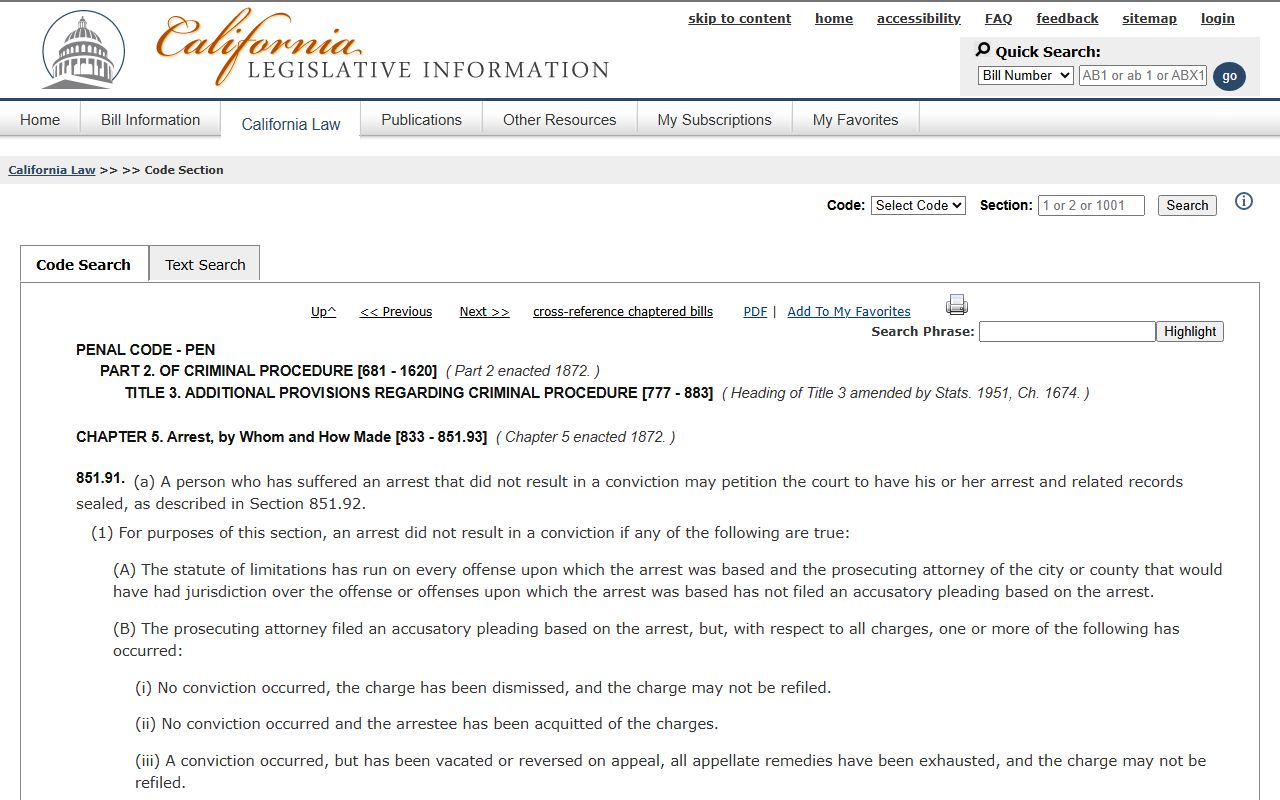
Petitions are filed in the Alameda Superior Court criminal division that heard the case.
Factual Innocence Under Penal Code § 851.8
A second sealing path is harder to win, but the relief is broader. Penal Code § 851.8 sets a factual innocence standard. A person must show no reasonable cause exists to believe they committed the offense. The petition can begin with the arresting agency. If denied, the superior court can hear it next. A win can lead to sealing and eventual destruction of the arrest record. That is stronger than § 851.91, but the standard is high.
The screenshot below is from the official Penal Code § 851.8 page on California Legislative Information.
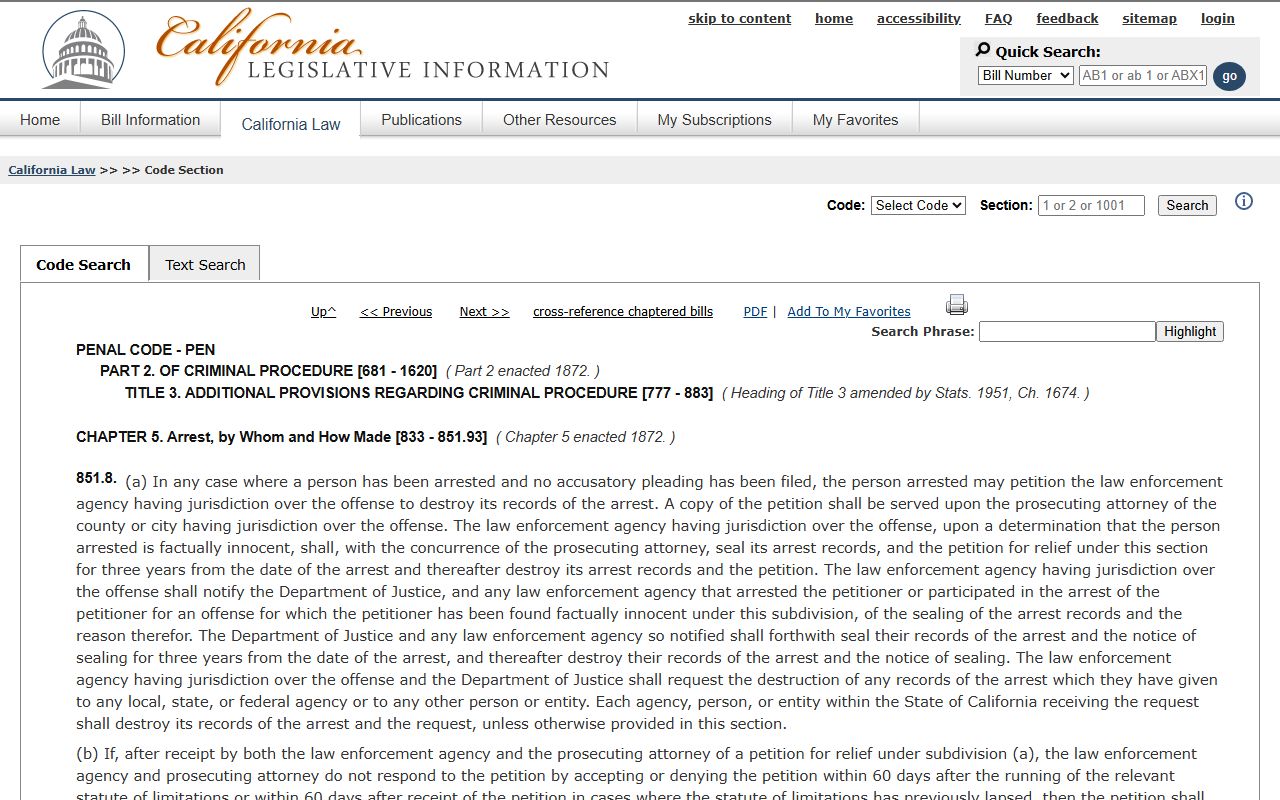
Most people use § 851.91 first and reserve § 851.8 for cases with strong proof of innocence.
Expungement and Dismissal Under Penal Code § 1203.4
When there was a conviction, the common tool is Penal Code § 1203.4. The statute is often called expungement, but it is a dismissal after probation rather than a true erase. The court can permit a withdrawal of plea or set aside a verdict in qualifying cases, then dismiss the accusation. The conviction does not vanish for every purpose. It can still be raised for some licensing, firearm, and immigration questions.
The screenshot below is from the official Penal Code § 1203.4 page.
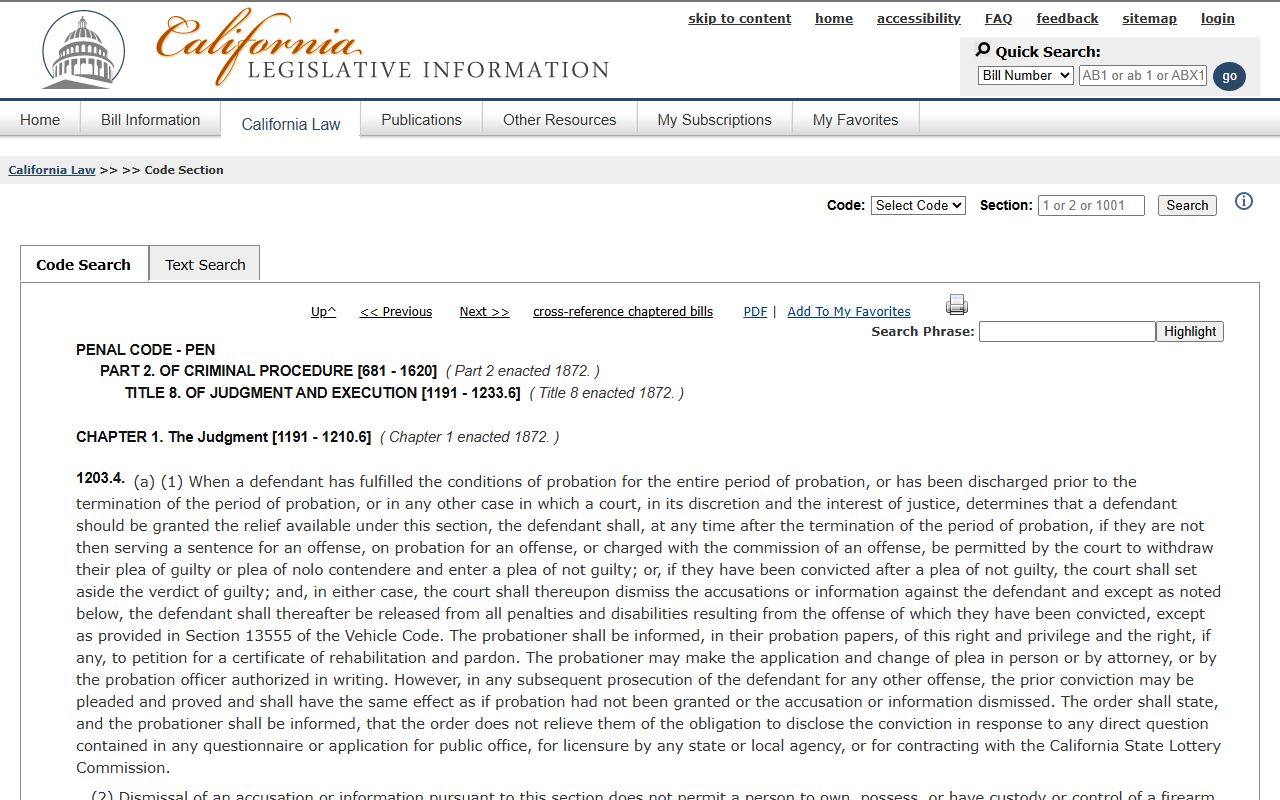
The Alameda County Public Defender runs a Clean Slate unit that helps eligible clients with § 1203.4 petitions.
Sealed vs Expunged
The two words sound alike, but they do different work. Sealing under PC § 851.91 or § 851.8 hides the arrest from most public view. Expungement under PC § 1203.4 dismisses a conviction after probation. Neither one fully erases the record.
| Point | Sealed (§ 851.91 / § 851.8) | Expunged (§ 1203.4) |
|---|---|---|
| Applies to | Arrest with no conviction; factual innocence | Conviction after probation |
| Effect | Public access restricted; § 851.8 can lead to destruction | Dismissal; plea set aside |
| Law enforcement | Often visible | Often visible |
| Employers | Limited disclosure | Can be reported as dismissed |
| Path | Petition to court; § 851.8 may start with agency | Petition in court of conviction |
Note: A sealed record under § 851.91 is not the same as a destroyed record; only § 851.8 leads to destruction.
Record-Cleaning and Sealing Step-by-Step
The Alameda record-cleaning path is set by the case type. The steps below cover the common workflow for any of the three statutes.
- Pull the case file from the Criminal Online Records Search and confirm the case number, charges, disposition, and probation status.
- Pick the right statute: § 851.91 for an arrest with no conviction, § 851.8 for factual innocence, § 1203.4 for a conviction after probation.
- Check help options. The Alameda Public Defender services page lists Clean Slate for eligible clients.
- Prepare the petition using California Courts Self-Help forms or counsel-prepared forms.
- File at the Alameda Superior Court criminal division at the courthouse that heard the case.
- Serve the District Attorney and any other required agency.
- Attend the hearing if one is set, then confirm the order reaches the DOJ summary criminal history.
The image below comes from the California Courts Self-Help Clean Your Record page.
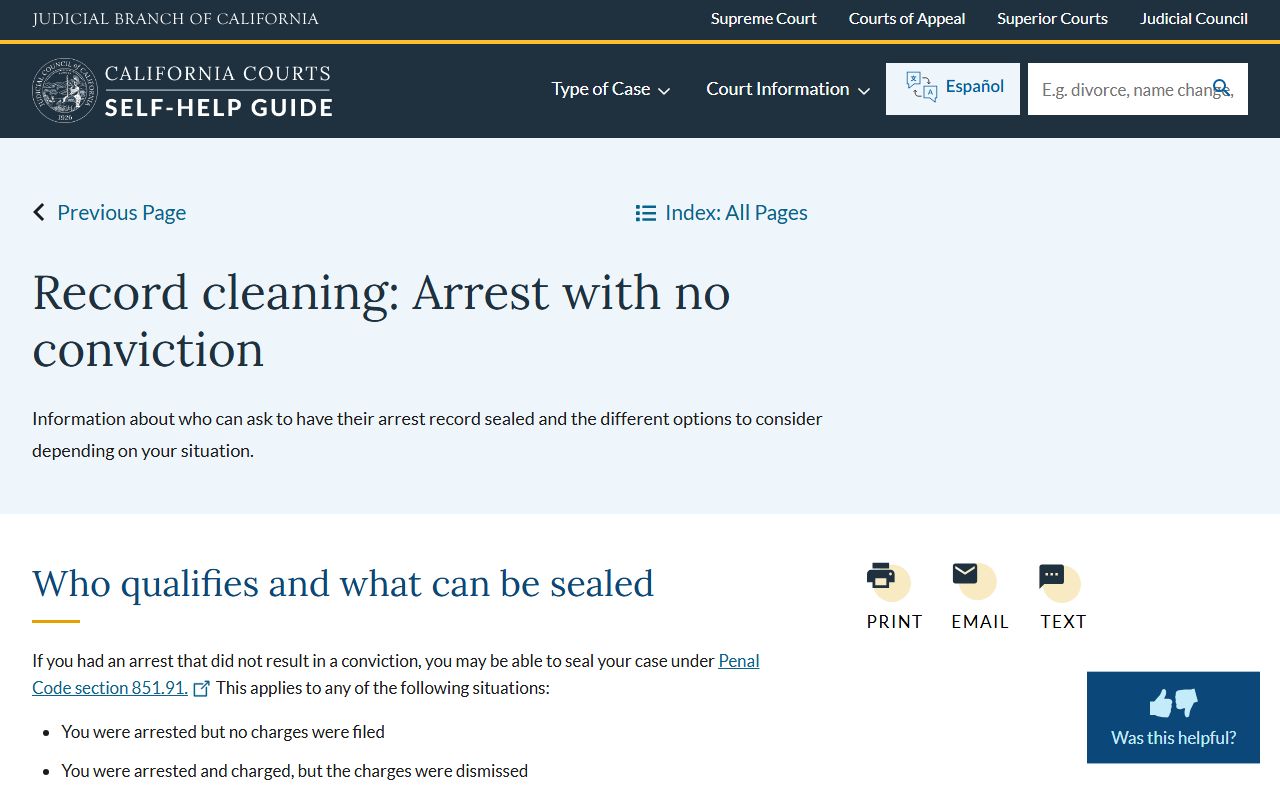
The Self-Help workflow covers both arrest sealing and post-probation dismissal.
DOJ State Summary Criminal History
The Alameda court file is not the same as the statewide criminal history. Penal Code § 11105 defines the California Department of Justice state summary criminal history and controls who can receive it. The DOJ file pulls from arrests reported by law enforcement and dispositions reported by courts across the state. A public court search is not a substitute for a DOJ background check. The DOJ file goes only to authorized entities and to the person themselves through a limited record-review process.
The image below is from the official Penal Code § 11105 page.
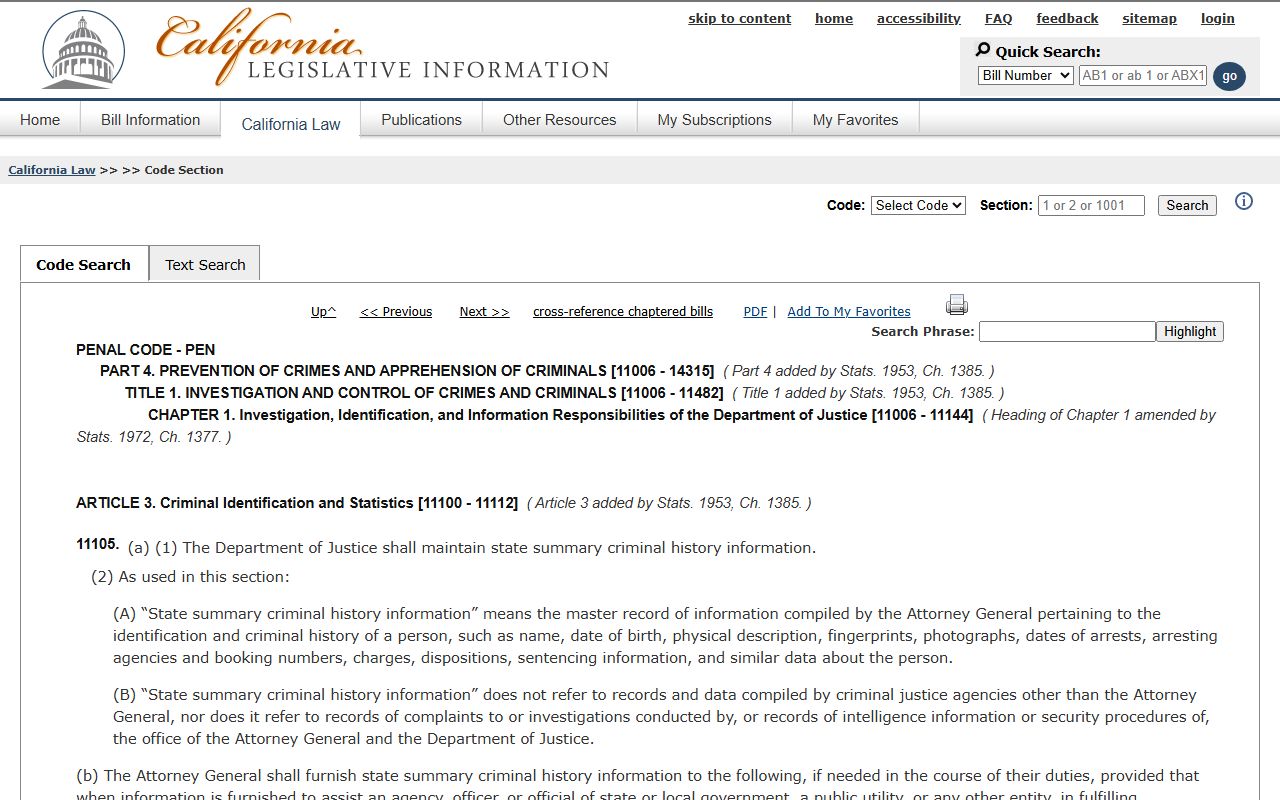
For DUI cases that touch both criminal and driver records, the traffic court records page covers the split. DUI cases run through the criminal division, but the driver record is held by the DMV under a separate file.
District Attorney and Public Defender
The Alameda County District Attorney files criminal cases on behalf of the People. The Public Defender represents people who cannot afford private counsel. The two offices shape what shows up in the court record.
Alameda County District Attorney
1225 Fallon Street
Oakland, CA 94612
510-272-6222
Alameda County Public Defender
1401 Lakeside Drive, Suite 400
Oakland, CA 94612
510-272-6600
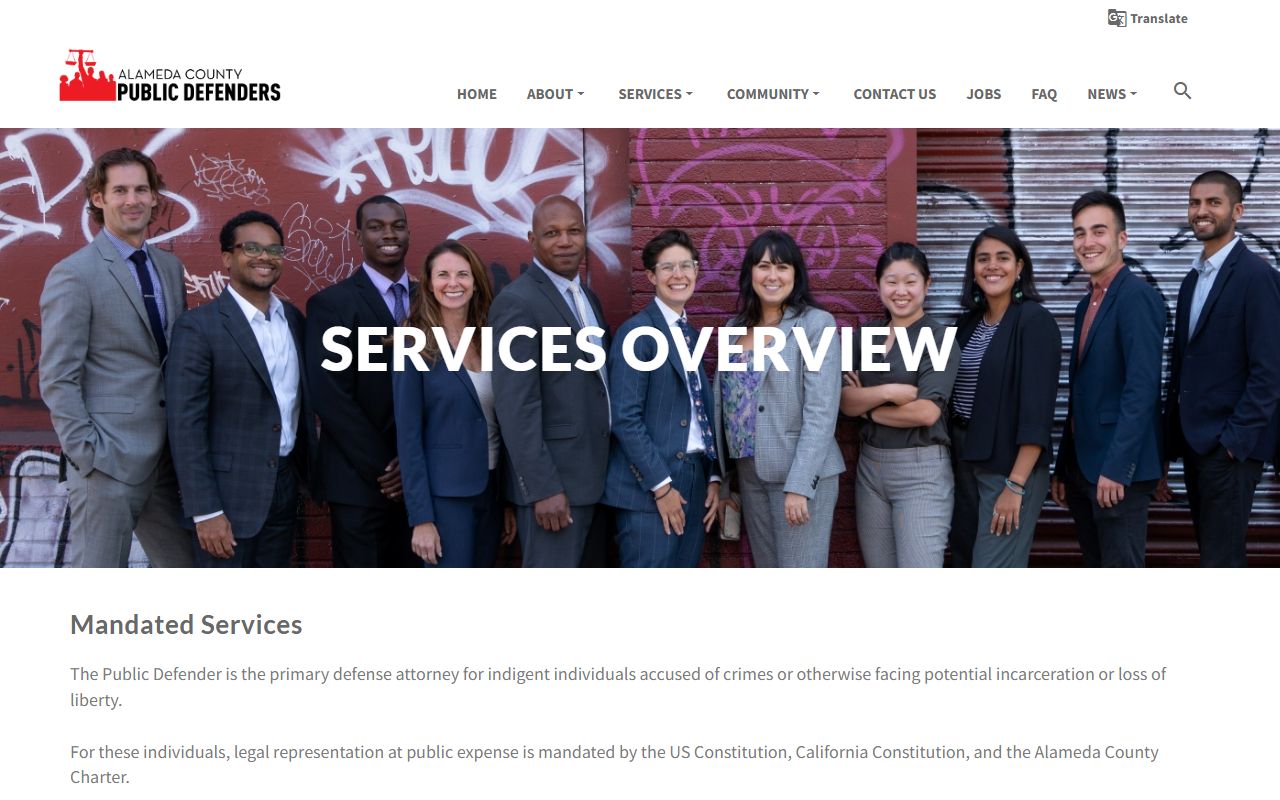
The DA listing from the California Attorney General names Ursula Jones Dickson as Alameda’s District Attorney. The office lists Victim-Witness Services, a Consumer, Environmental and Worker Protection Division, and specialized units. The Public Defender, led by Brendon D. Woods, reports more than 120 lawyers, around 40 support staff, 19 investigators, and 5 social workers. The holistic defense model covers mental health and drug treatment, immigration, employment, housing, and record remedies.
The image below comes from the Alameda Public Defender services page.